
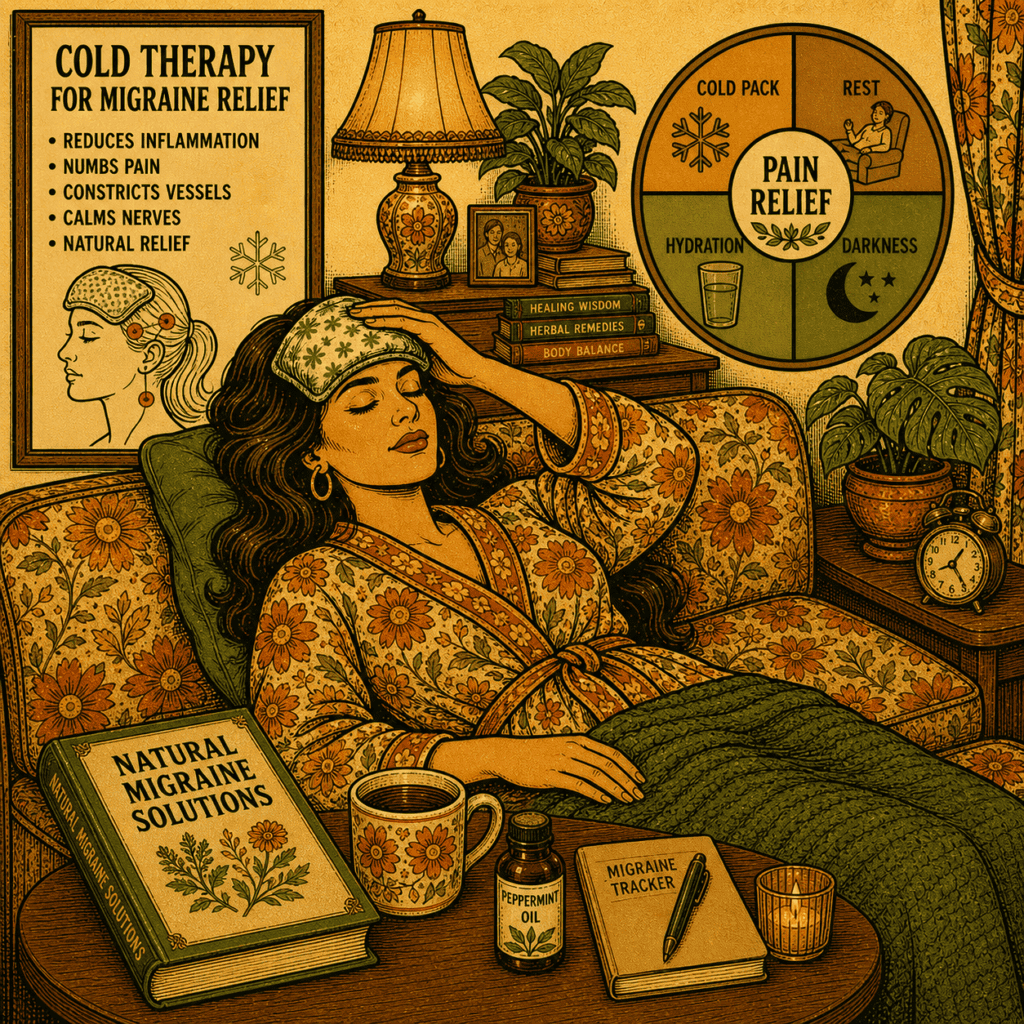
The word ” headache” doesn’t really do justice to a migraine. Migraines don’t just ache; they take over. Once the pain starts, it’s hard to think about anything else.
Millions of migraineurs tackle their pain with prescription or over-the-counter drugs. But there are other options. For about $4, you can buy a pack of four WellPatch Migraine pads from Mentholatum. Users are instructed to stick a pad on their forehead as soon as pain starts. The pad is filled with a watery gel that starts evaporating when the package is opened. The evaporation cools the skin beneath the pad, a sensation that’s enhanced by a subtle scent of menthol. According to the package, the cooling lasts up to eight hours.
 Migraine Be Koool pads, a very similar product from Kobayashi Healthcare, also sell for about $1 each. Like the WellPatch Migraine pads, Migraine BeKoool pads stick directly to the forehead and cool the skin through evaporation. And, like the WellPatch, they have a little menthol for extra cooling.
The Thera-Med Headache Band from Carex takes a colder approach to migraine relief. Unlike the WellPatch or Be Koool pads, it chills out in the freezer or refrigerator when not in use. The band, which is held in place with Velcro straps, contains a “micro-gel” that freezes without hardening. One side of the band is covered in fabric for a more gentle cool-down, kind of like wrapping a towel around an ice pack. People who want extra cold can use the side without the fabric. Expect to pay less than $10 for each band, which can be reused indefinitely.
The claims: The WellPatch website says that the pad “cools and soothes the discomfort associated with migraine.” Todd Cantrell, director of marketing at Mentholatum, clarifies that the pads don’t really treat the migraine itself but can make the whole experience a little more bearable.
The website for Migraine Be Koool says that “nothing provides more immediate and soothing relief to migraine headaches than Migraine Be Koool.” Kobayashi Healthcare didn’t respond to requests for comment.
The Thera-Med website says that the band “helps relieve migraine, tension and sinus headaches.” It also says that “researchers have found that cold treatment is shown to be effective in 50-60% of headache sufferers.” Fred Thiemann, a product manager for Carex, notes that “many people spend lots of money on drugs for headaches,” adding that the pad could “solve their problem” at a fraction of the price.