
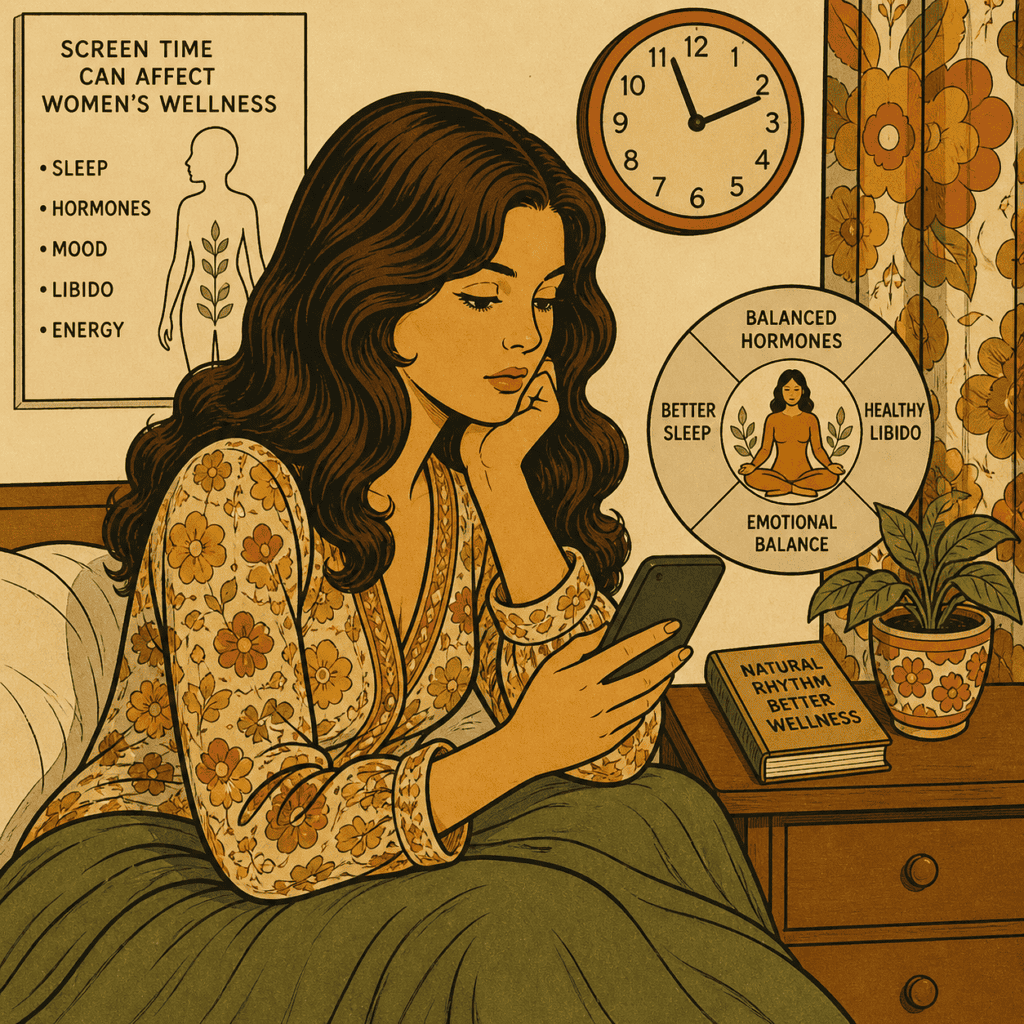
Many women in India balance demanding work, family care, and constant smartphone use — often late into the night. Sexual wellness encompasses physical comfort, desire, arousal, emotional connection, and freedom from pain or distress. It is influenced by hormones, mental health, relationships, medications, and lifestyle factors including sleep and screen habits. Research increasingly links heavy evening screen use with poorer sleep and higher stress, both of which can affect libido and overall wellbeing. This article explores those connections respectfully and offers practical, evidence-informed steps — not moral judgments about technology use.
How Screen Time May Affect Sexual Wellness
- Sleep disruption — blue light and stimulating content delay melatonin, reducing sleep quality; poor sleep lowers energy and can dampen sexual desire
- Chronic stress and cortisol — endless notifications and work messages keep the nervous system on alert, making relaxation and intimacy harder
- Body image and comparison — social media exposure correlates with self-esteem concerns in some studies, which may affect confidence and comfort
- Reduced partner connection — phones in the bedroom can replace conversation, affection, and shared downtime
- Physical factors — prolonged sitting and poor posture contribute to pelvic floor tension and general fatigue
- Underlying medical causes — low desire often reflects thyroid disease, anaemia, depression, PCOS, perimenopause, or medication side effects — not screens alone
Practical Steps for Healthier Digital Habits
What to Avoid
- Blaming yourself or your partner solely for complex changes in desire
- Using unregulated supplements marketed for libido without medical advice
- Ignoring painful intercourse — this is not normal and is treatable
- Comparing your relationship to curated social media portrayals
- Self-diagnosing hormonal problems from online symptom lists
When to See a Doctor
- Painful intercourse, vaginal dryness, or recurrent infections
- Irregular periods, excess hair growth, or suspected PCOS or thyroid issues
- Low mood, anxiety, or trauma affecting intimacy — confidential counselling helps
- Perimenopause or menopause symptoms including hot flashes and dryness
- Medications (some antidepressants, contraceptives) may affect desire — discuss alternatives
- Concerns about safety in a relationship — seek support from trusted professionals or helplines
Frequently Asked Questions
Does too much screen time directly lower libido?
There is no single proven direct cause, but screen-heavy evenings often reduce sleep and increase stress — both linked to lower desire in women in several studies. Addressing sleep and stress frequently improves overall wellness more than focusing on screens alone.
Is it normal for desire to fluctuate?
Yes. Desire naturally varies with menstrual cycle phase, pregnancy, breastfeeding, stress, illness, and life stage. Concern is warranted when changes are persistent, painful, or distressing — not for normal variation.
Can reducing screen time improve my relationship?
Many couples find that device-free time improves communication and emotional closeness, which supports intimacy for some people. It is one factor among many — relationship counselling can help when communication is strained.
Should I take herbal products advertised for female wellness online?
Be cautious. Many products lack rigorous safety data and may interact with medicines or hormones. Discuss supplements with a qualified doctor, especially if you have liver disease, take contraceptives, or plan pregnancy.